Why High-Functioning Men Still Struggle With Alcohol
Nate Herlean
You're doing everything right.
Your work is solid. Your house is maintained. Your family doesn't think you have a problem. You still work out. You still show up.
So why does every night still end with a glass? Or three? Why does the thought of not drinking fill you with something that feels like dread?
This is the trap of being high-functioning. The system rewards you for keeping it together on the outside while your relationship with alcohol quietly becomes something you can't control.
## The High-Functioning Trap: Why Your Success Hides the Real Problem
You're successful. That's not a problem in itself.
But success creates a belief: If I'm doing well at work, if my marriage is intact, if my kids respect me—then I don't have a real problem.
This thinking keeps thousands of men locked in a cycle they can't see.
Here's the truth: a problem with alcohol has nothing to do with how well you're managing everything else. A high-functioning drinker is still a person who's lost control over alcohol. The control you feel is an illusion built on compartmentalization.
You're not struggling because you're weak. You're struggling because your brain has learned that alcohol solves something for you. And you've gotten very good at organizing your life around that solution.
Every responsible person you meet—the CEO, the doctor, the manager with the perfect family—might be pouring a drink at 6 PM and wondering why stopping feels impossible.
The version of you that succeeds at work and keeps your family stable? That version is also the version that can't stop. These aren't separate people. They're the same person with two different mirrors.
## Why Smart, Disciplined Men Still Lose This Battle
You've never lost a battle before.
You went after something? You got it. You set a goal? You crushed it. You made a decision? You stuck with it.
So when you decide to cut back on drinking, you approach it the same way. Willpower. Discipline. Logic.
And it doesn't work.
This isn't because you're weak. It's because alcohol doesn't respond to willpower the way a work project does.
Alcohol responds to something deeper—to what's missing, what you're running from, what you're trying to feel. A high-functioning man is usually drinking to solve something: stress, disconnection, boredom, the weight of expectations. Maybe all of it.
Willpower can't out-discipline a feeling.
You can tell yourself I'm not drinking tonight right up until the moment you're holding a glass. The decision you made this morning gets overridden by something that feels more powerful in the moment.
That's not weakness. That's how the brain works when alcohol has become part of your emotional toolkit.
The men who break free aren't the ones with more willpower. They're the ones who figure out what alcohol is actually doing for them—and build a better way to handle it.
## The Cost of "Fine": What's Actually Happening Under the Surface
You feel fine most of the time. That's what makes this so confusing.
You're not waking up in jail. You're not losing jobs. You haven't hit rock bottom—and frankly, you don't want to, because that's not who you are.
But "fine" is a dangerous baseline for a high-functioning person.
Here's what's probably happening beneath the surface:
Your relationships are thinner than they used to be. Not broken—just thinner. Less real. You're managing them, not building them. Your partner doesn't fully trust you. Your kids see you as reliable but distant. You have fewer people who really know you.
Your energy is divided. Part of your brain is always thinking about drinking—when you can, how much, how you'll explain it if someone notices. That takes fuel. Serious fuel. You're not as sharp at work, even if no one can tell yet.
Your identity is getting smaller. You're not the guy who hikes or reads or builds things anymore. You're the guy who drinks. Everything else revolves around that. The hobbies disappear. The version of you that was curious—that's going quiet.
You're beginning to make quiet deals with yourself. I'll cut back next week. I'll quit on my birthday. I'll moderate during the week. These deals never last. Each time one breaks, you lose a tiny piece of trust in yourself.
Shame is starting to live in you. Not shame about being an alcoholic—you don't see yourself that way. But shame about being out of control. About not being able to just stop. About hiding something from people you care about.
This is what high-functioning looks like from the inside.
## What You're Actually Struggling With
It's not the drinking itself.
The drinking is what you do. It's not who you are.
What you're actually struggling with is one of these:
You're trying to feel okay in a life that doesn't feel okay. The job is good but the days are long. The marriage is stable but disconnected. The responsibility is real. The pressure doesn't stop. Alcohol makes all of it feel more manageable for a few hours.
You're trying to be the person everyone expects while becoming someone you're not proud of. The professional version, the family-man version, the stable version—none of these versions gets to have needs or struggles. So you organize your nights around relief. Alone, with a drink, you get to just be tired instead of just being strong.
You're protecting yourself from feeling how much you've changed. Who were you before this? Probably someone more connected, more available, more alive. That guy is fading. And instead of grieving that, you're drinking to avoid the grief.
You're missing a sense of purpose beyond performance. You're good at achieving. But achievement is hollow without connection—to yourself, to people who matter, to something bigger than the next promotion or the next responsibility.
The alcohol isn't the problem. The alcohol is the solution to a problem you haven't named yet.
## The Path Forward: What Actually Changes Things
You don't need rehab. You don't need to be a "real" alcoholic for this to matter. You don't need to hit bottom.
You need to get honest about one thing: what's alcohol actually doing in your life?
Not to your life. Not the damage—you know that. But for you. What does it provide? What would you lose if it wasn't there? What would you have to feel?
The men who break free aren't the ones who white-knuckle through willpower. They're the ones who get clear on what they'd rather have instead.
Not instead of drinking. Instead of the life that made drinking feel necessary.
Maybe that's real intimacy with your partner instead of the performance version you've been running.
Maybe that's a version of yourself you actually recognize when you look in the mirror.
Maybe that's just being tired without needing to be tired alone.
You don't have to decide everything today. You don't have to commit to never drinking again or to some program or to a label that doesn't fit.
You just need to get curious about one question: What am I actually looking for when I reach for that glass?
Answer that honestly, and the path forward starts to appear.

The body content of your post goes here. To edit this text, click on it and delete this default text and start typing your own or paste your own from a different source.

Recovery isn’t about white-knuckling or waiting for the perfect plan—it’s about aligning your life with what truly matters. Discover the 4 anchors of faith, family, friendship, and meaningful work that turn survival into a joyful, purpose-driven recovery lifestyle.

Recovery isn’t about finding the perfect program—it’s about becoming the person who makes any program work. Discover the 5 mindsets that define your success and why shifting your perspective can change everything.

Most people in recovery don’t fail because they’re lazy—they fail because they’re overwhelmed. Here’s how to simplify your recovery, focus your energy, and actually move forward.

If you’ve ever felt like asking for help was a weakness, this one will reframe that forever

Trying to logic someone into recovery often backfires... here is the strategy for helping someone you love without losing yourself.

If you’re feeling worse after detox, you’re not broken. You’re finally facing what needs real healing.
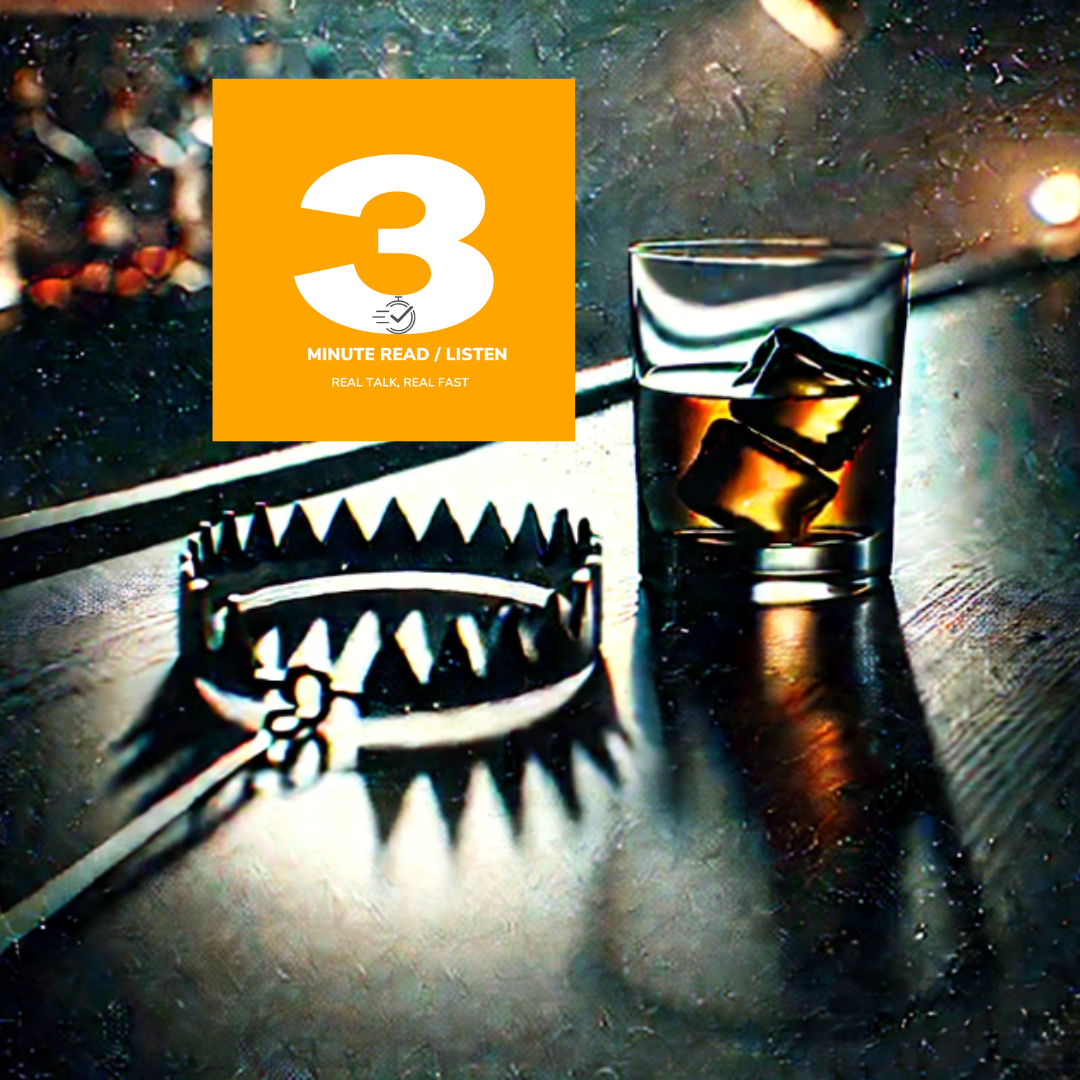
Discover how alcohol becomes a trap when it’s used to silence pain...and why understanding this is the first step to real change.
Your Way Out - End the cycle and DESIGN a life you’re proud of.

What if addiction could set you free instead of holding you back?

Struggling to guide your teens and young adults? Discover how short-term pain can lead to lifelong recovery and success.